If you are deciding between a townhouse and a condo in the West Village, the right answer usually comes down to more than square footage or style. In this part of Manhattan, one block can feel quiet and residential while the next is shaped by mixed-use buildings, busier retail corridors, and a very different ownership experience. This guide will help you compare privacy, maintenance, costs, financing, and block-by-block context so you can choose with more clarity. Let’s dive in.
Why West Village context matters
In the Village, the neighborhood name alone does not tell you enough. The Greenwich Village Historic District includes more than 2,000 buildings across 65 blocks, and the streetscape can shift quickly from one area to another.
That is especially important in the West Village. According to the city, the area has a core centered on 7th Avenue South, with commercial and mixed-use strips along 7th Avenue South, Bleecker Street, Christopher Street, and West 4th Street, while many side streets remain more residential. The Far West Village adds another layer, with converted lofts, 19th-century row houses, the West Village Houses complex, and newer residential buildings shaped by zoning intended to preserve neighborhood scale.
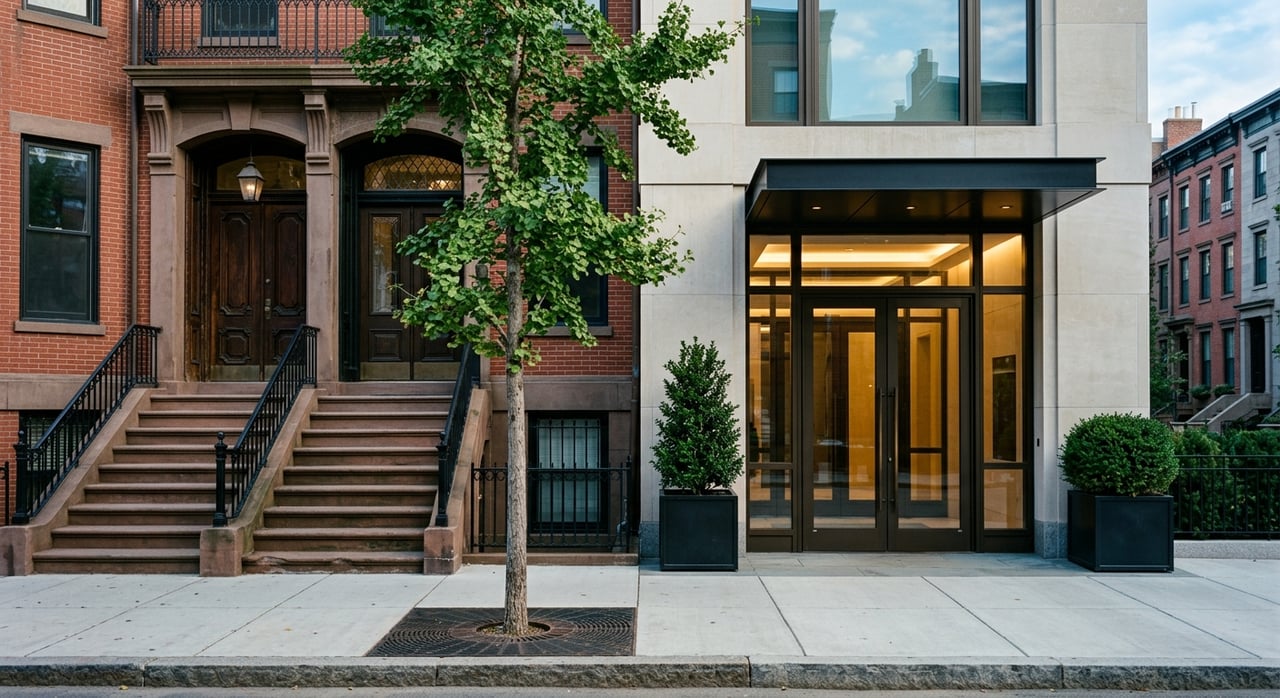
The takeaway is simple: compare the specific block, not just the ZIP code or neighborhood label. A condo on a mixed-use corridor and a townhouse on an interior historic block can offer very different day-to-day living, even if they are only a few minutes apart.
How townhouses and condos differ
A townhouse is generally a multi-level home attached to another house by a shared wall. A condo, by contrast, is a form of ownership where you own your unit and share ownership of common areas and facilities, as defined by Fannie Mae’s homeownership glossary.
In practical terms, that often means a townhouse offers more direct control over your space and building decisions. A condo usually offers a more shared ownership structure, with recurring dues that help cover operations and reserves.
Neither option is automatically better. The best fit depends on how you want to live, how much responsibility you want to take on, and what kind of building or block feels right for you.
Choose a townhouse for more control
If you value privacy and independence, a townhouse may be the stronger match. You are more likely to control the building itself, and in many cases, you may also have access to features like a private rear yard, private roof use, or a more separated entry experience.
That independence appeals to many buyers in the West Village because the area still has blocks that read clearly as townhouse territory. The neighborhood planning context also supports that distinction, with a large base of wholly residential properties alongside condo parcels in more mixed-use settings, according to a New York City Planning Commission document.
A townhouse can also feel more personal. If you want a home that lives like a vertical private residence rather than an apartment within a larger building, this option may better align with your goals.
Choose a condo for lower-maintenance living
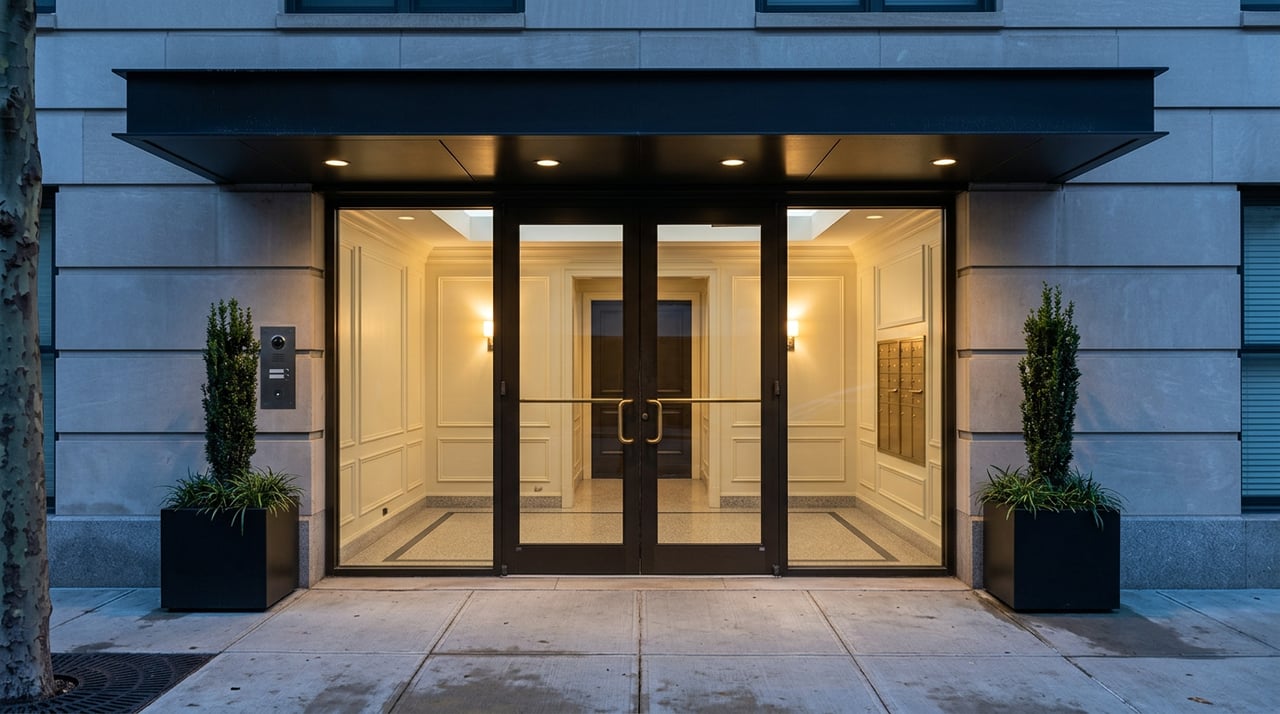
If convenience is high on your list, a condo may be the better path. Condo ownership often means shared building services, common-area maintenance handled by the association, and a more hands-off ownership experience than a townhouse.
That can be especially appealing if you travel often, are relocating, or simply do not want to manage every repair and building issue yourself. Condo owners typically pay monthly dues, and they may also need HO-6 insurance for the interior of the unit, while the association carries master insurance for exteriors and common areas, based on Fannie Mae guidance.
In the West Village, condos are often found on blocks with more mixed-use character or in buildings that offer a different lifestyle from traditional row houses. If you want more services and less direct property management, that tradeoff can be worthwhile.
Outdoor space works differently
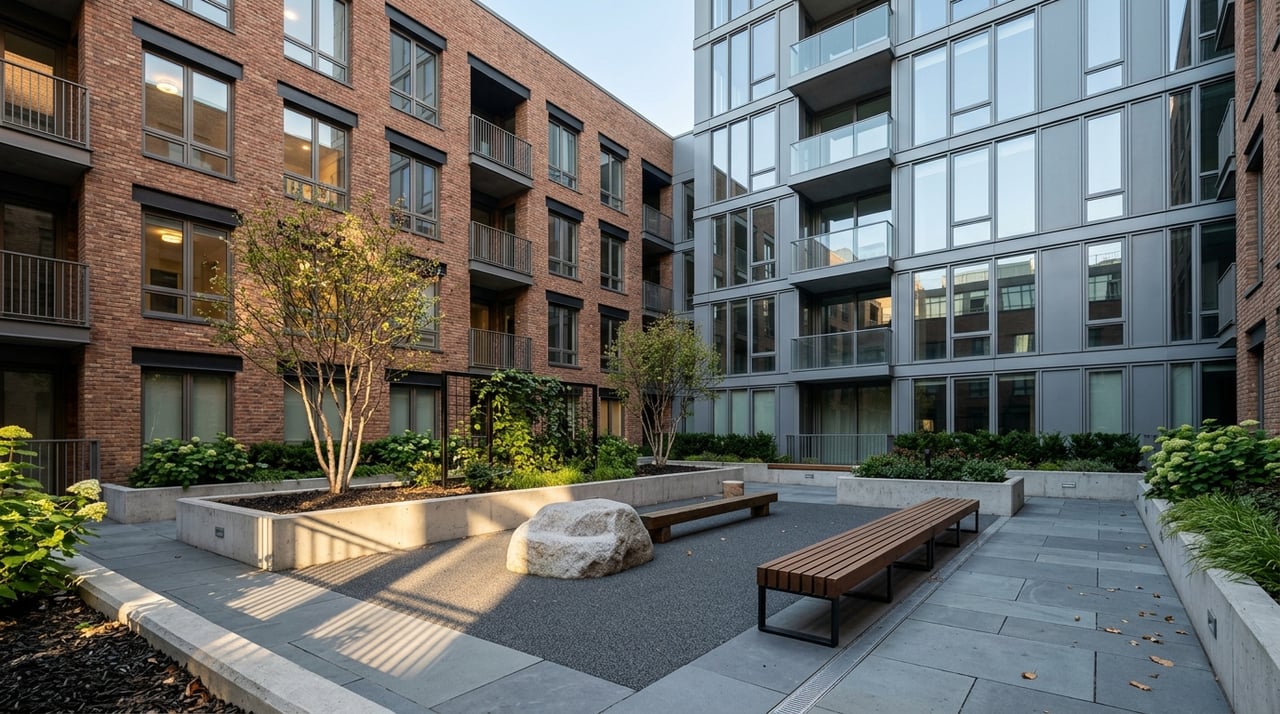
Outdoor space is one of the biggest lifestyle differences between these property types. In general, townhouse owners are more likely to control a private lot, rear garden, or roof area, while condo buyers depend on the building and unit layout for terraces, balconies, or shared roof access.
In the Village, that matters even more because many properties fall within landmarked or historic settings. The city notes that in designated landmarks and historic districts, many exterior changes require Landmarks Preservation Commission approval, including larger exterior alterations, demolition work, or new construction affecting the designated building.
So if private outdoor space is central to your wish list, it is smart to look beyond the listing description. You also want to understand what level of control comes with that space and whether future exterior work may face preservation review.
Carrying costs matter more than sticker price
The purchase price is only part of the story. What really shapes affordability is your total monthly and annual carry.
The Consumer Financial Protection Bureau notes that ongoing homeownership costs can include mortgage payments, mortgage insurance, property taxes, homeowners insurance, flood insurance, HOA fees, maintenance, repairs, and utilities. It also notes that closing costs often range from about 2% to 5% of the purchase price, excluding the down payment.
For West Village buyers, that means you should compare:
- Monthly common charges or condo dues
- Property taxes
- Insurance costs
- Utility responsibilities
- Repair and replacement exposure
- The potential for special assessments
A condo may have efficient shared costs and a tax structure that keeps monthly carry manageable. But that same condo could also have high common charges or future assessments for capital projects.
A townhouse avoids common charges, but you take on the full cost of roof work, facade repairs, systems replacement, insurance, and any building-related upkeep yourself. In a historic neighborhood, that can be a meaningful part of the long-term ownership equation.
Taxes can vary by property type
New York City property taxes can add another layer to the condo-versus-townhouse decision. According to the NYC Department of Finance, Class 1 includes most one-, two-, and three-family homes and most condos that are not more than three stories, while Class 2 includes most rentals, co-ops, and condos.
For tax year 2026, the city-set rates are 19.843% for Class 1 and 12.439% for Class 2. Still, the actual tax bill depends on assessed value, caps, exemptions, and abatements.
That is why broad assumptions can be misleading. A townhouse is not always more expensive to carry, and a condo is not always cheaper. The right comparison is property-specific and should include both taxes and building-level costs.
Financing may feel simpler with a townhouse
Financing can also influence your decision. Condo purchases add a project-level layer of lender review.
Fannie Mae’s Condo Project Manager is used for lender-delegated condo project review, and Fannie Mae notes that projects may need added due diligence if they have hotel-like characteristics, high investor or second-home concentration, or too much commercial or mixed-use space. That can be relevant in the Village, where some condo buildings sit on active retail corridors.
By contrast, a townhouse is generally financed more like a standard home loan rather than through condo project review. If the townhouse is multi-unit or mixed-use, underwriting becomes more property-specific, based on Fannie Mae property eligibility guidance.
For buyers using financing, it also helps to remember that the CFPB says a larger down payment lowers monthly payments, and putting 20% or more down typically avoids mortgage insurance. The tradeoff is less cash left over for repairs, renovations, or reserves.
Market data shows how quickly medians can move
Recent data also shows why broad neighborhood averages should be used carefully in the Village. In January 2026, West Village market data showed a median sale price of $1.6M overall, with condos at a median of $2.6M on 13 sales and houses at a median of $7.3M on only 3 sales.
In February 2026, Greenwich Village’s median sale price was $1.435M, with condos at a median of $4.9M on 15 sales, while house data was too limited to be statistically meaningful. In other words, inventory is tight enough that a small number of high-end sales can move median pricing quickly.
This is one more reason to stay focused on your exact product type, block, and budget range. In the West Village, averages can hide as much as they reveal.
West-edge blocks offer a different feel
The west side of the neighborhood has its own character. Hudson River Park brings river access, mature plantings, and a distinct sense of openness along Manhattan’s western edge.
For some buyers, being closer to West Street and the river changes the equation. Those blocks can feel very different from interior Village streets that are more closely associated with the historic townhouse core.
If your daily routine includes waterfront walks, bike access, or a stronger connection to the park, that may tilt you toward specific condo buildings or west-edge homes. If you prefer a more classic interior Village setting, townhouse-heavy side streets may feel more aligned.
How to choose the right fit
If you are narrowing the decision, start with your lifestyle before you focus on the floor plan.
A townhouse may fit best if you want:
- More privacy and separation
- Greater control over the property
- The possibility of private outdoor space
- A more house-like living experience
A condo may fit best if you want:
- Lower-maintenance ownership
- Shared building services
- Less direct responsibility for exterior upkeep
- A more lock-and-leave lifestyle
Then pressure-test the choice against the block itself. In the West Village, the same property type can feel very different depending on whether it sits on a commercial corridor, an interior historic street, or a west-edge location near the park.
Make the decision with a full-cost lens
The smartest West Village decisions usually come from looking at the full picture, not just the asking price. You want to weigh privacy, maintenance, financing, taxes, outdoor space, and the rhythm of the exact block.
That kind of side-by-side analysis is where calm, detailed guidance matters. If you want help comparing a specific townhouse and condo, or narrowing the right West Village block for your goals, The Shapot Team can help you evaluate the tradeoffs with clear, measured advice.
FAQs
What is the main difference between a West Village townhouse and condo?
- A townhouse usually offers more direct control, privacy, and responsibility for the building, while a condo typically offers shared ownership of common areas, monthly dues, and a lower-maintenance ownership structure.
Are carrying costs higher for a West Village townhouse or condo?
- It depends on the specific property. A townhouse avoids condo dues but puts repairs, insurance, and building upkeep directly on you, while a condo may have common charges, taxes, and possible assessments that affect total monthly carry.
Does block location matter when choosing a West Village home?
- Yes. Interior historic blocks, mixed-use corridors, and west-edge locations near Hudson River Park can offer very different living experiences, even within the same neighborhood.
Is financing easier for a West Village townhouse or condo?
- In many cases, townhouse financing feels more straightforward because condos can require project-level lender review, especially in buildings with mixed-use features or higher investor concentration.
Can outdoor space be easier to get with a West Village townhouse?
- Often, yes. A townhouse is more likely to include direct control of a rear yard or roof area, while condo outdoor space depends on the specific unit and building rules.
Do landmark rules affect West Village townhouses and condos?
- They can. In landmarked buildings and historic districts, many exterior changes may require approval from the Landmarks Preservation Commission, which is important to understand before planning future work.